

4 Steps to Building a Culture of Feedback in Your C-I Course
Feedback isn’t just for the end—it’s something we build into a Communication-Intensive Course from day one.
Feedback is at the heart of Communication-Intensive (C-I) teaching. It’s how students develop their skills as communicators—through practice, feedback, reflection, and revision. But creating a classroom culture where feedback flows both ways—from instructor to student and student to instructor—takes intentional work.
Students need to know that feedback is not just about evaluation—it’s about learning, growth, and connection. And instructors need feedback from students, too, to create responsive, inclusive learning environments.
This guide shares practical strategies for building a culture of feedback in your C-I course—from the first days of the semester to the final project—so that feedback becomes a normal, expected, and valued part of how learning happens.
Step 1: Set the Expectation Early
When: Weeks 1–2 of a 15-week course or the first few days of a shorter course cycle.
How:
Include a statement in your syllabus about the value of feedback.
Talk about communication and feedback and how you will do both in the class.
Share how past student feedback has shaped your course/teaching today.
Invite early, low-stakes feedback (e.g., did you understand the assignment instructions? Did you have enough time to grasp concepts before we moved to something new?).
Example Script:
“In this course, you’ll practice communication and get feedback to improve. I also value your feedback—it helps me improve your learning experience. You’ll have chances to share input throughout the semester, including in a final C-I course evaluation.”
Step 2: Use Feedback Throughout the Semester
When: Weeks 3–13 of a 15-week course or throughout the middle of a shorter course cycle.
How:
Use tools like one-minute reflections, such as asking students to respond to prompts on index cards (exit tickets), or use an anonymous survey in the learning management system.
Check in about what’s supporting or hindering student learning.
Act on feedback and explain the changes you make.
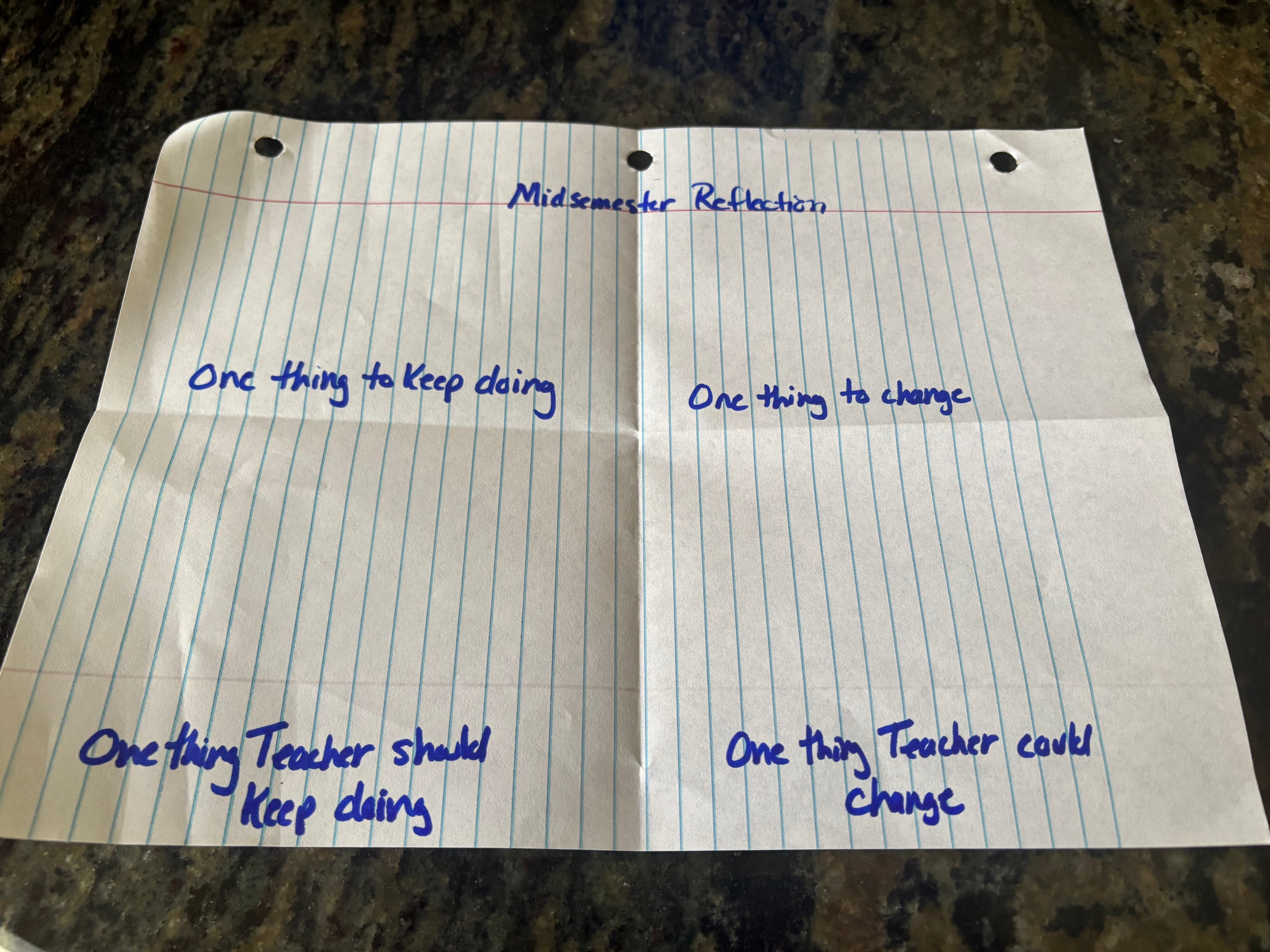
Consider a midterm feedback activity, such as a four-square reflection.
Example Prompts:
“What’s one thing in this course that is supporting your learning so far?”
“What’s one thing that would help you engage more effectively?”
“How are the communication assignments helping you build your skills?”

Step 3: Promote Course Evaluation Participation
When: Final 1–2 weeks or the final few days of a shorter course cycle.
How:
Explain the purpose and impact of C-I evaluations.
Dedicate 10 minutes of class for students to complete it.
Emphasize anonymity and how feedback drives change.
Remind the students what C-I activities you included in the course.
Example Script:
“As we wrap up, I’d love to hear your thoughts on how this course supported your communication development. Your feedback is anonymous and helps improve future versions of this course. Thanks for taking a few minutes to complete the evaluation.”
Bonus Tactics:
Offer an incentive (e.g., “If 85% complete it, I’ll bring snacks!”)
Reflect briefly on how past feedback shaped your teaching.
Step 4: Reflect & Plan Ahead
When: After the semester ends.
How:
Review your C-I eval results separately from overall course evaluations
Look for feedback trends (e.g., clarity, helpfulness of feedback).
Identify action steps for next time.
Reflection Questions:
What elements of C-I assignments were most effective?
Were there recurring concerns I could address?
How can I improve my feedback practices?
Remember: Feedback isn’t just for the end—it’s something we build into the course from day one. What are some ways you build a culture of feedback in your course? How have you adjusted something based on student feedback?